Best Practices for In-House Pallet Inspections
Pallets are often treated as expendable tools—but when they fail, the consequences are anything but minor. Product damage, employee injuries, equipment downtime, and customer complaints frequently trace back to one root cause: poor pallet inspection practices.
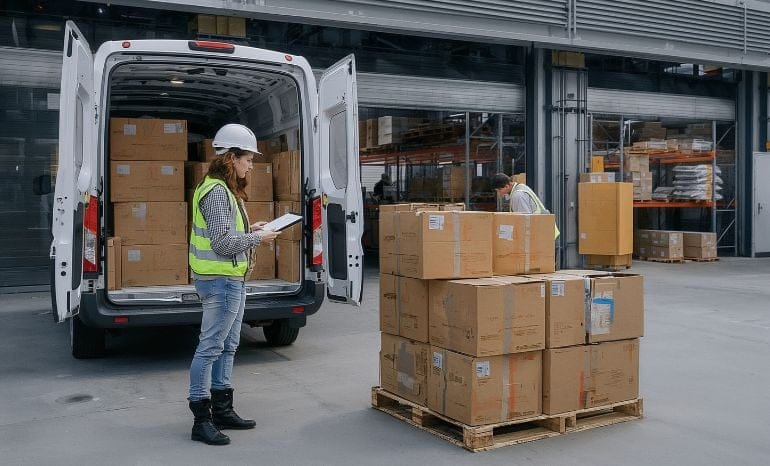
Regular pallet inspections are one of the lowest-cost ways to reduce risk across your operation. While there is no single government-mandated pallet inspection standard, there are well-established industry guidelines that companies should be applying consistently in-house.
Most pallet inspection programs are based on guidance from:
- NWPCA (National Wooden Pallet & Container Association)
- GMA (now known as Consumer Brands Association)
- OSHA’s general duty clause (maintain a safe workplace)
These standards all point to the same principle: If a pallet cannot safely support its intended load, it should be removed from service.
What to Inspect
Your in-house pallet inspection should focus on structural integrity, not cosmetic appearance.
Deck Boards
Remove pallets with:
- Missing deck boards
- Split boards longer than the width of the board
- Loose or protruding nails
- Severely warped or broken boards
Deck boards are the first point of contact with product—and one of the most common failure points.
Stringers or Blocks
Immediately reject pallets with:
- Cracked or broken stringers
- Missing material at forklift entry points
- Split block corners (for block pallets)
Stringer damage significantly reduces load capacity and often leads to sudden failure.
Forklift Entry & Lead Boards
Check for:
- Crushed or delaminated lead boards
- Fork impacts that have compromised entry notches
- Excessive wear that limits fork clearance
These areas take the most abuse and should be inspected frequently.
Overall Stability
A pallet should:
- Sit flat on the floor
- Not rock or twist
- Maintain square geometry
If a pallet doesn’t sit flat when empty, it will only get worse under load.
When and Where Inspections Should Happen
Effective programs inspect pallets at multiple touchpoints:
- Inbound receiving (before pallets enter your system)
- Before loading product
- Before shipping
- After unloading returns
- During housekeeping and cleanup
Inspection does not need to slow operations. Most experienced handlers can identify unsafe pallets in seconds.
Simple In-House Grading System
Many facilities succeed with a 3-tier approach:
- Acceptable – Safe for use as-is
- Repairable – Remove and send to repair or core pile
- Reject – Unsafe; remove from service immediately
Color-coded tags or designated pallet zones help enforce this visually.
Who Should Be Responsible?
Pallet safety works best when:
- Operators are empowered to reject pallets
- Supervisors reinforce decisions
- Procurement aligns pallet specs with actual use
If employees are penalized for rejecting pallets, inspections will fail.
Pallet inspections are not about perfection—they’re about risk control. A consistent, well-communicated in-house pallet inspection standard reduces injuries, protects product, and lowers total pallet cost.
If you don’t already have a written inspection guideline, start simple. Train your team on what unsafe looks like, and remove those pallets from circulation every time.
Reach out to the pallet pros at Rose Pallet to continue the conversation.