Inside the Heat-Treating Chamber
When it comes to preparing wood packaging for global shipping, heat-treating pallets is the gold standard. Most shippers know it’s required by ISPM-15 regulations, but fewer understand what actually happens inside the chamber.
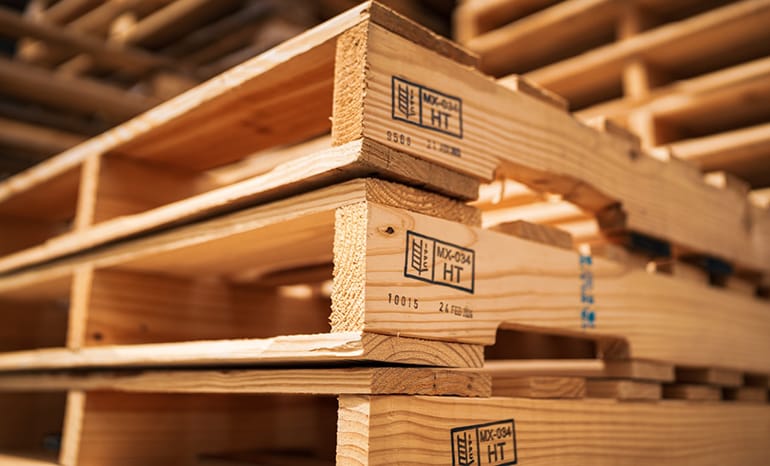
A heat-treated and stamped pallet is ready for international shipping, but the journey to get there is more than just turning up the heat. The process involves specialized equipment, strict monitoring, and precise timing—all designed to protect global ecosystems and ensure your shipments move smoothly across borders.
Step 1: Loading the Chamber
After pallets or lumber are assembled, they’re carefully stacked inside a large, sealed heat-treating chamber. Technicians space the stacks to ensure hot air circulates evenly around every board.
Step 2: Raising the Heat
Industrial heaters push hot air into the chamber, gradually raising the internal temperature. Sensors monitor conditions at multiple points, both in the chamber and inside the wood itself.
The target temperature is 132.8°F (56°C) and the required hold time is 30 continuous minutes.
This combination is proven to eliminate harmful pests, eggs, and pathogens that could spread across borders.
Step 3: Monitoring & Recording
Throughout the process, digital control systems track the temperature and time. This data is logged and stored to verify compliance. Only once every pallet or crate has met the required threshold is the treatment considered complete.
Step 4: Cooling & Certification
After treatment, the wood is cooled and inspected. Pallets are then stamped with the ISPM-15 mark—your assurance that the product is export-ready. This stamp is recognized worldwide and required for international shipments.
Added Treatment Benefits
While pest control is the main goal, heat treatment has ancillary benefits, too:
- Reduces wood’s moisture content
- Lowers the risk of mold and fungus
- Improves durability and longevity
Heat treating may sound like a simple blast of hot air; but in reality, it’s a precise process monitored by experts every step of the way. The result? Pallets and crates that are safer for the global supply chain and better for your business.
Need help with your pallet program? Our experts are ready to assist. Contact us today!